
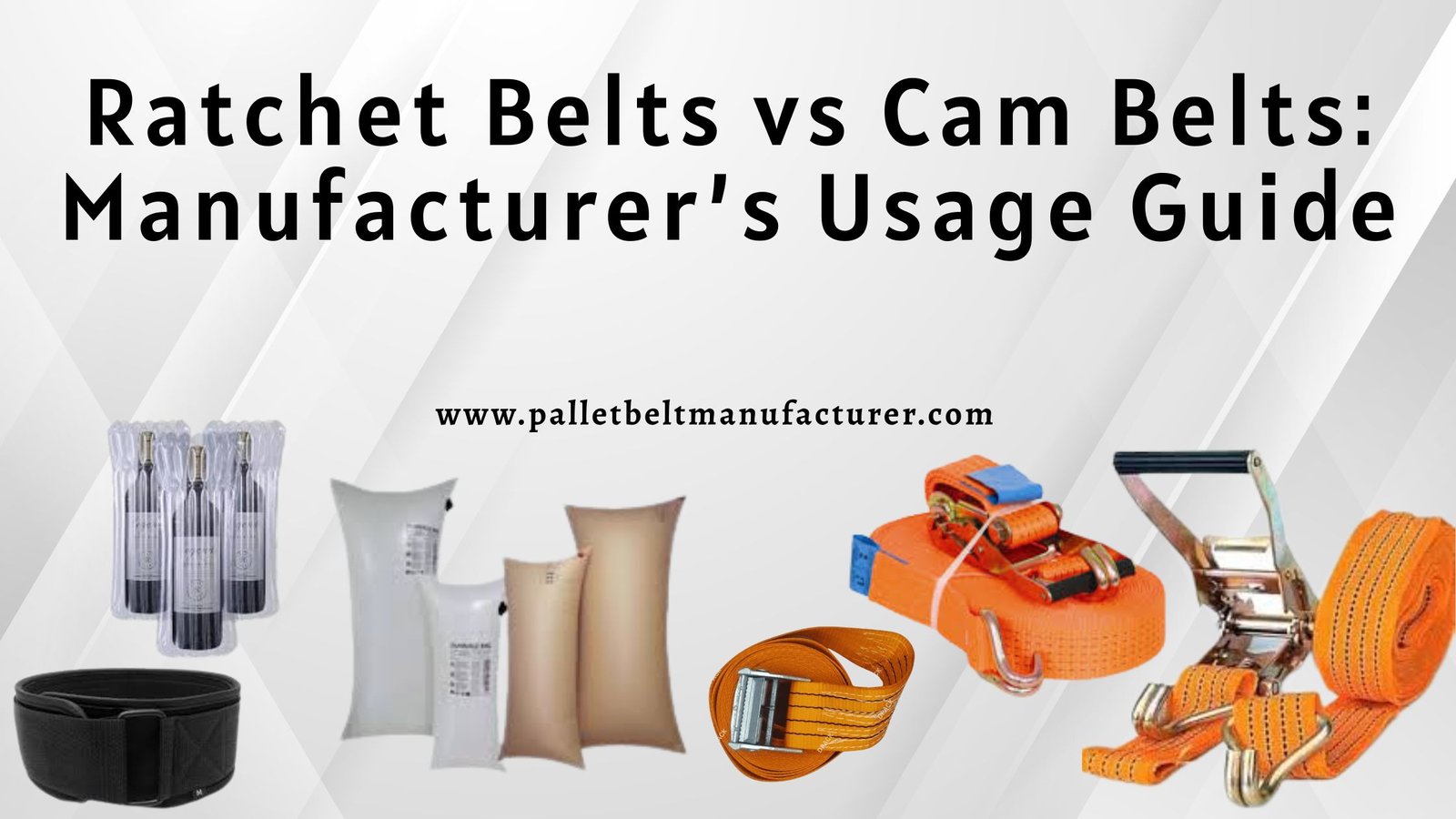
Ratchet Belts vs Cam Belts: Manufacturer’s Usage Guide
In logistics, warehousing, and industrial transportation, load securing is a critical part of safe operations. Whether you are transporting machinery, pallets, consumer goods, or industrial components, selecting the right belt system ensures stability and prevents cargo damage.
Two of the most commonly used load securing solutions are ratchet belts and cam belts. While both are designed to secure loads, they serve different purposes based on load weight, tension requirements, and application conditions.
As a trusted Ratchet Belt Manufacturer, DPack provides high-strength belts engineered for industrial reliability and long-term durability. This guide explains the differences between ratchet belts and cam belts to help you make the right choice.
Understanding Ratchet Belts
Ratchet belts, also known as ratchet tie-down straps, are heavy-duty load securing straps equipped with a ratcheting mechanism. The ratchet handle allows users to apply high tension easily, ensuring the cargo remains tightly secured during transport.
The ratchet mechanism multiplies applied force, making it ideal for securing heavy loads. Once tightened, the locking system prevents the strap from loosening due to vibration or movement.
Ratchet belts are commonly used in:
- Industrial transportation
- Heavy machinery shifting
- Construction material hauling
- Warehouse pallet securing
- Truck and trailer cargo stabilization
Because of their strong tension capability, ratchet belts are preferred for high-weight and high-risk applications.
Understanding Cam Belts
Cam belts, also known as cam buckle straps, use a spring-loaded cam mechanism instead of a ratchet system. Tension is applied manually by pulling the strap through the buckle.
Cam belts are easier and faster to operate but provide lower tension compared to ratchet belts. They are best suited for lighter loads where excessive tension is not required.
Cam belts are commonly used in:
- Light cargo securing
- Fragile product transportation
- Personal or commercial vehicle cargo
- Small equipment stabilization
Since cam belts rely on manual pulling force, they are generally used for medium or lightweight applications.
Key Differences Between Ratchet Belts and Cam Belts
The primary difference lies in their tension capacity and application strength.
Ratchet belts are designed for heavy-duty use. The ratcheting mechanism allows higher tension, making them suitable for securing heavy pallets, industrial machinery, and bulk cargo. They offer superior holding strength and are less likely to loosen during long-distance transportation.
Cam belts, on the other hand, are better suited for lighter loads. They are easier to use and quicker to tighten, but they do not provide the same level of tension as ratchet belts. For delicate goods, cam belts may be preferable because they reduce the risk of over-tightening and product damage.
Another important distinction is user effort. Ratchet belts require operating the ratchet handle multiple times to achieve the desired tension, while cam belts are tightened simply by pulling the strap manually.
Choosing the Right Belt for Your Application
Selecting between ratchet belts and cam belts depends on your specific operational needs.
If your business involves heavy industrial transportation, large pallet shipments, or construction materials, ratchet belts are the safer and more reliable option. Their high load-bearing capacity ensures secure cargo even on rough roads.
If you are handling lightweight goods, smaller packages, or fragile items that require gentle securing, cam belts may be more suitable. They provide adequate security without applying excessive force.
A professional Ratchet Belt Manufacturer like DPack can help evaluate your load requirements and recommend the best solution based on weight, transportation mode, and safety standards.
Advantages of Ratchet Belts
Ratchet belts offer several benefits for industrial users. They provide superior tension control, enhanced load stability, and improved safety during long-haul transportation. Their robust locking mechanism minimizes the risk of loosening caused by vibration.
High-quality ratchet belts are made from durable polyester webbing with corrosion-resistant metal components, ensuring long service life even in demanding environments.
Advantages of Cam Belts
Cam belts are lightweight, easy to use, and ideal for quick load securing. They require less effort and can be operated efficiently by a single user. Their simple mechanism reduces the risk of mechanical failure and makes them cost-effective for lighter applications.
For businesses that frequently transport smaller goods, cam belts offer convenience and speed.
Importance of Quality Manufacturing
Regardless of the type chosen, belt quality plays a crucial role in load safety. Inferior webbing material or weak buckles can lead to cargo shifting, damage, or accidents.
Working with an experienced Ratchet Belt Manufacturer such as DPack ensures:
- High-tensile strength webbing
- Durable ratchet and cam mechanisms
- Compliance with safety standards
- Custom length and load capacity options
- Reliable after-sales support
Quality manufacturing directly impacts load security performance.
Safety and Compliance Considerations
Industries must follow proper load securing regulations to ensure safe transportation. Using certified belts with proper load rating labels helps prevent overloading and ensures compliance with transport safety guidelines.
Regular inspection of belts for wear, fraying, or metal corrosion is essential to maintain safety standards.
Conclusion
Both ratchet belts and cam belts serve important roles in cargo securing, but their applications differ based on load weight and tension requirements. Ratchet belts are ideal for heavy-duty industrial applications, while cam belts are suitable for lighter loads and quick securing tasks.
Partnering with a reliable Ratchet Belt Manufacturer like DPack ensures high-quality products designed for durability, safety, and performance.
Choosing the right belt not only protects your cargo but also enhances operational efficiency and transportation safety.