


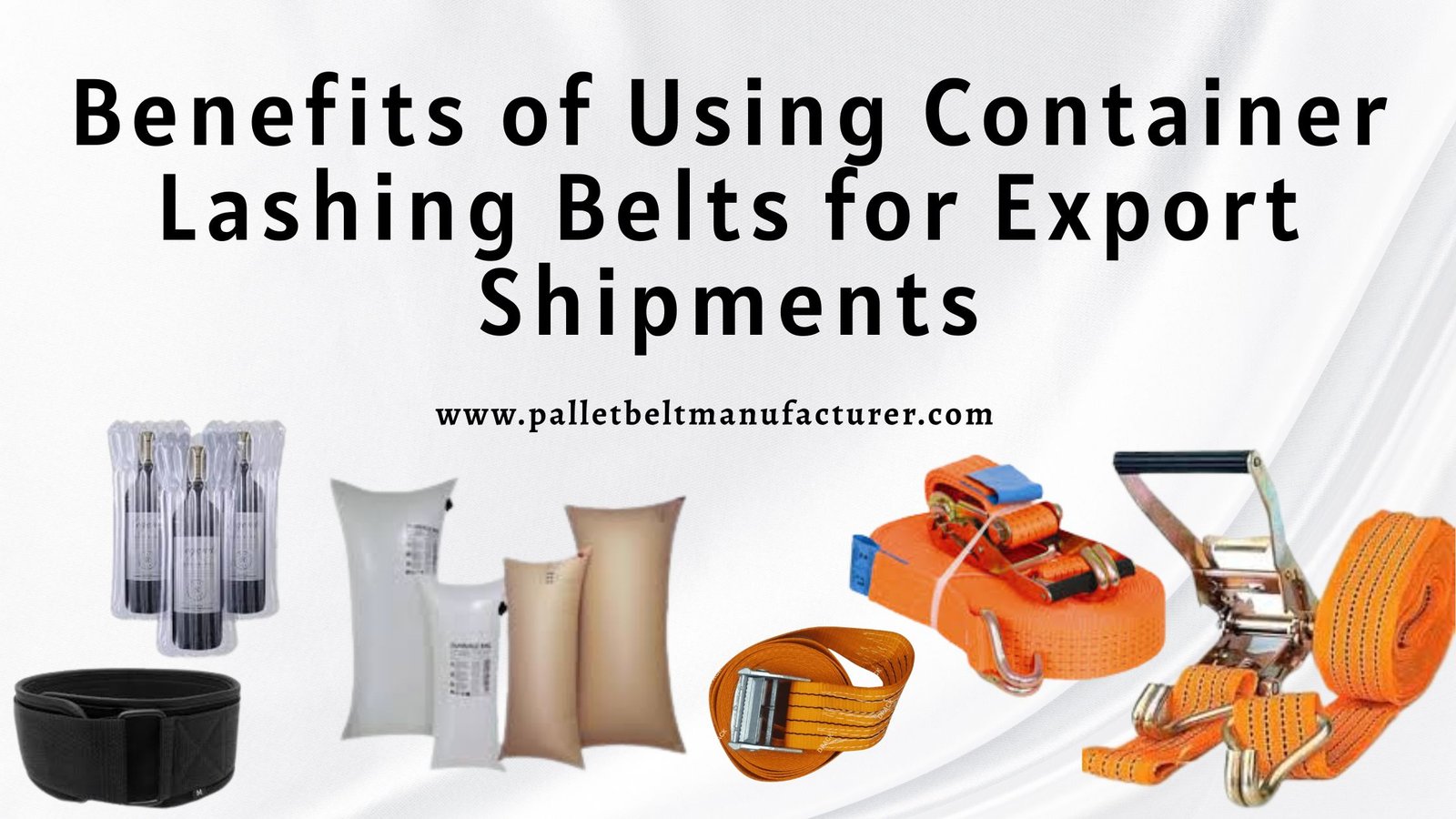
Export shipments often travel long distances and pass through multiple stages of transportation, including road, rail, and sea freight. During transit, cargo may experience vibrations, sudden movements, shifting loads, and changing weather conditions. Without proper cargo securing methods, these factors can increase the risk of damaged goods, packaging failures, and shipment delays.
Container lashing belts provide a practical solution for securing cargo inside shipping containers. They help restrain goods, reduce unwanted movement, and support safer cargo handling throughout the transportation process. For exporters, freight forwarders, logistics companies, and shipping professionals, choosing suitable lashing belts is an important part of effective cargo management.
Dpack offers packaging and cargo-securing solutions for businesses involved in shipping and export operations. Understanding the benefits of container lashing belts can help businesses make informed decisions when planning their export packaging requirements.
What Are Container Lashing Belts?
Container lashing belts are strong strapping systems designed to secure cargo and help prevent movement during transportation. They are commonly manufactured from high-strength synthetic materials, such as polyester, and may be used with appropriate tensioning devices, hooks, buckles, or other securing accessories.
These belts can be used to restrain different types of cargo inside shipping containers, depending on the load weight, packaging configuration, and transportation requirements. They are particularly useful when goods need additional restraint beyond what pallets, cartons, or other packaging materials can provide.
Selecting the right lashing belt involves considering its rated capacity, construction, compatibility with the cargo, and the securing method required for the shipment.
Improved Cargo Stability During Transit
One of the main benefits of container lashing belts is their ability to help keep cargo in position during transportation. Containers may experience movement when ships encounter rough seas, trucks travel over uneven roads, or rail wagons change speed.
Properly selected and installed lashing belts help restrain cargo and reduce the likelihood of shifting. This is especially important when shipping palletized goods, machinery, industrial components, and other products that require stable positioning.
Improved cargo stability can also help reduce the risk of goods colliding with one another or striking the container walls. However, the effectiveness of the securing arrangement depends on correct belt selection, suitable anchoring points, and proper installation.
Reduced Risk of Product Damage
Cargo movement can lead to scratched surfaces, broken components, crushed cartons, and damaged packaging. For exporters, such problems may result in customer complaints, replacement costs, insurance claims, or financial losses.
Container lashing belts help limit unwanted movement when used as part of a suitable cargo-securing plan. By keeping goods properly restrained, they can support better protection for products during loading, handling, and transportation.
They are particularly useful for shipments containing heavy equipment, packaged industrial products, palletized materials, and goods that could be damaged if they shift during transit.
For fragile or sensitive cargo, lashing belts should be combined with appropriate cushioning, blocking, bracing, and edge protection where required.
Suitable for Different Types of Export Cargo
Export shipments vary considerably in size, weight, shape, and packaging requirements. Container lashing belts can be selected for a range of applications, provided the belt system is appropriate for the specific load.
Common applications may include:
- Palletized goods: Helping restrain pallet loads and reduce movement inside containers.
- Industrial machinery: Supporting the securing arrangement for equipment and heavy components.
- Building materials: Helping stabilize appropriately packaged materials during transit.
- Cartons and packaged products: Providing additional restraint when used with suitable protective packaging.
- Irregularly shaped cargo: Supporting a customized securing arrangement designed around the load’s geometry.
The correct belt type and securing method should always be determined by the cargo’s characteristics, transportation conditions, and applicable load-securing requirements.
Lightweight and Convenient Handling
Compared with some traditional cargo-securing materials, textile lashing belts can be relatively lightweight and convenient to handle. Their flexibility makes them easier to position around different cargo configurations, while suitable tensioning accessories can help operators secure loads efficiently.
For businesses handling frequent export shipments, convenient handling can support smoother packing operations and help reduce unnecessary complexity during container loading.
Lashing belts may also be easier to store and organize than bulkier securing materials. Keeping them in suitable storage conditions and inspecting them before use can help maintain their serviceability.
Support for Efficient Loading and Unloading
A well-planned cargo-securing process contributes to more organized container loading. When cargo is arranged systematically and restrained appropriately, logistics teams can improve the consistency of their packing procedures.
Container lashing belts can form part of a repeatable cargo-securing process, helping teams follow established procedures for different shipment types. This can be particularly useful for exporters managing regular consignments or multiple containers.
Efficient loading also depends on proper cargo placement, weight distribution, container condition, and trained personnel. Lashing belts work best when they are incorporated into the overall loading plan rather than used as a standalone solution.
Flexible Cargo-Securing Options
Different export shipments require different securing arrangements. Container lashing belts are available in different specifications and configurations, allowing businesses to select solutions based on the type of cargo and the expected transportation forces.
Factors to evaluate include belt width, material, rated lashing capacity, elongation, fittings, and compatibility with designated anchoring points. The selected system should be appropriate for the load and the intended direction of restraint.
This flexibility helps businesses develop cargo-securing arrangements for a variety of shipment requirements. However, belts should never be selected based on appearance or width alone. Rated capacity and the complete securing configuration are essential considerations.
Potential Cost Savings for Exporters
Cargo damage can generate costs beyond the value of the damaged products. Businesses may also face additional handling, repacking, reshipping, claims processing, and delivery delays.
By helping restrain cargo during transportation, suitable container lashing belts can contribute to reducing avoidable movement-related damage. They may also support more consistent packing procedures when staff follow established loading and inspection practices.
To evaluate long-term value, businesses should consider belt quality, rated performance, expected frequency of use, storage requirements, and replacement needs. Reusable belts should only be reused when their design permits it and they remain in acceptable condition after inspection.
The goal should be to select a suitable, reliable securing system rather than simply choosing the lowest-priced option.
Important Safety Considerations When Using Lashing Belts
Correct use is essential to achieve the intended benefits of container lashing belts. An unsuitable belt or poorly planned securing arrangement may fail to restrain cargo effectively.
Before use, businesses should:
- Check the belt’s rated capacity and ensure it is suitable for the cargo and securing application.
- Inspect belts, stitching, hooks, buckles, and other components for cuts, fraying, deformation, or visible damage.
- Use compatible tensioning equipment and approved anchoring points.
- Protect belts from sharp edges and abrasive surfaces with suitable edge protectors.
- Distribute cargo weight appropriately and use blocking or bracing when needed.
- Follow relevant cargo-securing procedures and applicable transport requirements.
- Train personnel in proper installation, tensioning, inspection, and release procedures.
Container lashing belts should not be confused with lifting slings. Unless a product is specifically designed and rated for lifting, it must not be used to lift suspended loads.
How to Choose the Right Container Lashing Belts
Selecting the right lashing belts starts with understanding the shipment. Exporters should evaluate cargo weight, dimensions, centre of gravity, packaging type, and the forces the load may experience during transport.
Next, check the belt’s rated lashing capacity and the manufacturer’s instructions. Confirm that its fittings are compatible with the intended anchoring points and that the complete securing arrangement is suitable for the application.
Businesses should also consider environmental conditions, potential exposure to moisture or abrasion, inspection procedures, and whether the belts are intended for single-use or reusable applications.
Working with a reliable packaging and cargo-securing supplier can help businesses identify suitable options for their operational needs. Dpack can be considered as a supplier of packaging and cargo-securing solutions, with final product selection based on verified specifications and shipment requirements.
Conclusion
Container lashing belts play an important role in securing export shipments and supporting safer cargo transportation. When selected and installed correctly, they help improve cargo stability, reduce movement-related damage, simplify handling, and support more consistent container-loading practices.
For exporters, the right lashing solution can contribute to better shipment protection and more efficient logistics operations. Choosing belts based on rated capacity, cargo characteristics, transportation conditions, and proper safety procedures is essential for achieving reliable results.
Dpack can help businesses explore packaging and cargo-securing options suited to their shipping requirements. Before selecting a product, confirm its specifications and ensure the proposed securing arrangement meets the needs of the cargo and applicable transportation standards.
Frequently Asked Questions
What are container lashing belts used for?
Container lashing belts are used to restrain cargo and help prevent unwanted movement inside shipping containers during transportation. They are selected according to the load, securing arrangement, and transportation requirements.
What are the main benefits of lashing belts for export shipments?
Key benefits include improved cargo stability, reduced risk of movement-related damage, convenient handling, flexible securing arrangements, and support for organized container-loading operations.
How do I select the correct lashing belt for export cargo?
Consider the cargo weight and dimensions, required rated lashing capacity, transportation conditions, belt material, fittings, anchoring points, and manufacturer’s instructions. The entire securing arrangement must be suitable for the load.
Can container lashing belts be reused?
Some lashing belts are designed for reuse, while others are intended for a single application. Reuse only belts that are approved for it and remain in acceptable condition after inspection.
Are lashing belts suitable for heavy cargo?
They can be used in securing arrangements for certain heavy cargo when their rated capacity, fittings, anchor points, and installation method are suitable. Heavy or irregular loads may require additional blocking, bracing, or engineered securing arrangements.
Why should exporters choose a reliable lashing belt supplier?
A reliable supplier can help businesses understand product specifications, application suitability, and handling requirements. Exporters should verify product ratings and documentation before using any lashing system for a shipment.