

Introduction
Products can be exposed to multiple risks between the warehouse and the final destination.
During loading, unloading, stacking, storage, and transportation, goods may experience movement, vibration, impact, abrasion, moisture, dust, or pressure from surrounding cargo. Without suitable packaging and cargo-securing measures, these conditions can result in damaged products, rejected shipments, delays, and additional costs.
This is why protective packaging plays an important role in modern logistics.
Businesses transporting industrial equipment, consumer products, electronics, machinery, automotive components, packaged goods, and other products need packaging solutions that do more than simply cover the shipment. The packaging system should help keep the load stable and provide appropriate protection throughout the transportation process.
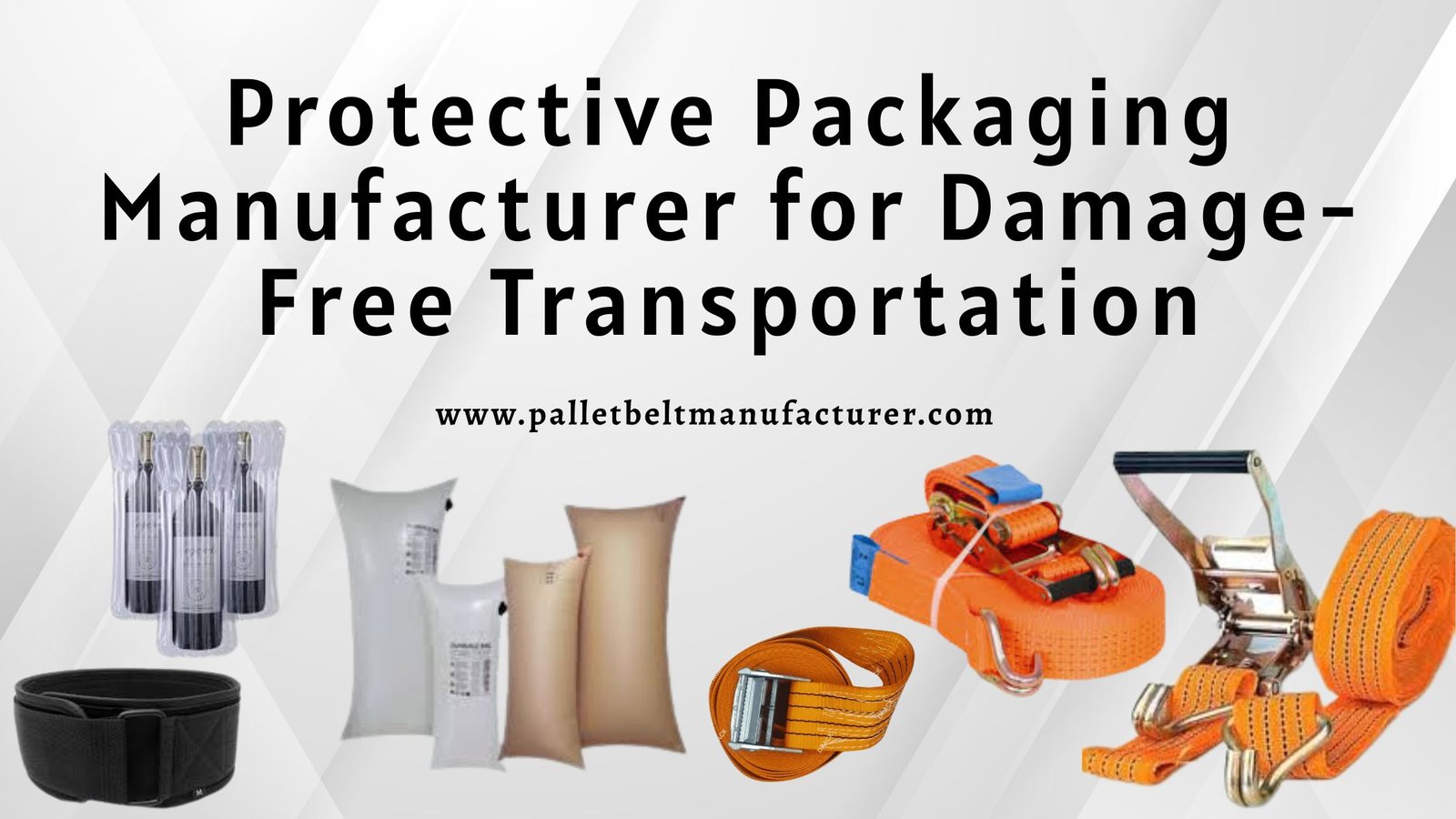
Products such as pallet belts, straps, pallet nets, pallet covers, edge protectors, stretch film, air bags, dunnage bags, and other cargo-control solutions can be selected according to the product, load configuration, transportation mode, and handling conditions.
D Pack provides industrial packaging and cargo-control solutions for businesses looking to improve cargo protection and transportation efficiency. Its current range includes pallet packing solutions, cargo-control and lashing products, warehouse packaging, e-commerce packaging, and other industrial packaging products.
What Is Protective Packaging?
Protective packaging refers to materials and systems designed to reduce the risk of damage to products during storage, handling, and transportation.
Depending on the application, protective packaging may help address:
- Product movement
- Impact
- Vibration
- Abrasion
- Dust
- Moisture
- Pressure
- Edge damage
- Load instability
- Gaps between cargo
The appropriate solution depends on what is being transported and how it will be transported.
For example, securing a palletized load may require straps or belts, while fragile products may require cushioning or air-based protection.
Why Protective Packaging Matters During Transportation
Transportation involves more than simply moving a product from one location to another.
A shipment may pass through several stages:
Manufacturing → Packaging → Warehouse → Loading → Transportation → Unloading → Distribution → Customer
Every additional handling stage can create an opportunity for damage.
Protective packaging helps businesses prepare shipments for these conditions.
A well-planned packaging system can help:
- Stabilize loads
- Reduce unwanted movement
- Protect product surfaces
- Improve pallet integrity
- Reduce handling damage
- Support safer transportation
- Minimize avoidable product losses
The objective is not to eliminate every transportation risk, but to select packaging that is appropriate for the expected risks.
1. Pallet Belts Help Secure Palletized Loads
Palletized products can shift if they are not adequately secured.
A pallet belt can be used as part of a load-securing system to help hold packaged goods together during handling and transportation.
This can be particularly useful for shipments containing multiple cartons, boxes, bags, or packaged units arranged on a pallet.
The correct belt or strap should be selected according to factors such as:
- Load weight
- Pallet dimensions
- Product configuration
- Transportation conditions
- Required tension
- Handling method
Businesses should follow appropriate loading and securing procedures rather than relying on the belt alone.
2. Protective Packaging Helps Reduce Product Movement
Movement inside a shipment can create significant problems.
When products move against one another or against the walls of a container, repeated contact can cause:
- Scratches
- Surface damage
- Broken packaging
- Crushed cartons
- Product deformation
Cargo-control products can help restrict unwanted movement.
D Pack describes its cargo-control and lashing solutions as being intended to help keep goods firmly in place and protected from movement, impact, or damage during transportation.
3. Edge Protectors Help Protect Corners
Strapping can apply pressure to the edges of cartons or packaged products.
Without suitable protection, excessive pressure may damage corners or deform packaging.
Edge protectors can distribute strap pressure across a wider area and provide an additional protective layer.
They can be particularly useful when:
- Straps are tightly tensioned
- Products have vulnerable corners
- Loads are stacked
- Cartons are placed directly against straps
The correct edge-protection method should be selected according to the packaging and load.
4. Pallet Covers Help Protect Against Dust and Moisture
Palletized goods may spend time in warehouses, loading areas, transportation vehicles, or temporary storage locations.
During these stages, products can be exposed to dust, humidity, rain, condensation, or other environmental conditions.
A pallet cover can provide an additional barrier around the load.
Dpack’s pallet-cover information highlights protection against moisture, dust and dirt, as well as abrasion and minor physical damage.
This can be especially useful for products that need to remain clean and dry during storage or transportation.
5. Air Cushion Packaging Can Protect Fragile Products
Some products require cushioning rather than simply load restraint.
Air cushions, air column packaging, and similar solutions can create a protective layer around individual products or groups of products.
These solutions can be useful for:
- Electronics
- Glass products
- Bottles
- Consumer goods
- E-commerce products
- Fragile components
The objective is to absorb or reduce the effect of shocks and contact during handling.
Dpack currently offers air-column and air-cushion packaging solutions alongside its other protective packaging products.
6. Dunnage Bags Can Help Fill Cargo Gaps
Gaps between cargo can allow products to move during transportation.
Dunnage bags are used in certain cargo-loading applications to fill suitable voids and help stabilize loads.
They can be considered for shipments where cargo needs additional restraint against movement.
However, dunnage bags should be selected and used according to the cargo configuration and applicable loading procedures.
They are one part of a broader cargo-securing system rather than a universal replacement for straps, belts, or other restraints.
7. Stretch Film Helps Stabilize Pallet Loads
Stretch film is widely used for wrapping palletized products.
It can help hold cartons and packages together while also providing an additional layer of protection against dust and handling exposure.
When combined with other pallet-packing products, stretch film can contribute to a more stable and organized pallet.
Dpack lists stretch film among its pallet-packing solutions along with PET straps, PP straps, pallet nets, tensioners, composite straps, and strapping clips.
How a Protective Packaging Manufacturer Can Help
Working with an experienced packaging company can make product selection easier.
A packaging provider can help businesses evaluate:
- Product dimensions
- Load weight
- Pallet configuration
- Transportation mode
- Protection requirements
- Packaging quantity
- Handling process
This can help businesses avoid purchasing unsuitable materials.
For recurring shipments, a packaging supplier can also help standardize packaging procedures across warehouses and distribution locations.
Why Choose D Pack?
D Pack provides industrial packaging, pallet packing, cargo-control, lashing, warehousing, and other protective packaging solutions.
Its current product portfolio includes solutions such as:
- Pallet belts and straps
- PET and PP straps
- Composite straps
- Ratchet belts
- Dunnage bags
- Cargo nets
- Pallet nets
- Stretch film
- Edge protectors
- Pallet covers
- Air-column packaging
- Packing air bags
- Packaging tools
Dpack states that it provides standard and customized packaging solutions and focuses on reducing cargo risk, improving protection, and supporting efficient logistics.
The company also states that it offers pan-India delivery and supports bulk packaging requirements.
For businesses transporting goods regularly, D Pack can help evaluate suitable protective packaging based on product characteristics, load configuration, and transportation requirements.
Conclusion
Protective packaging is an important part of damage-control planning during transportation.
Products can encounter movement, vibration, impact, abrasion, dust, moisture, and repeated handling between the manufacturing facility and the final customer. Using appropriate packaging can help businesses prepare their shipments for these conditions.
Pallet belts, straps, stretch film, pallet nets, edge protectors, pallet covers, air cushions, dunnage bags, and other packaging products can serve different protective functions.
The right solution depends on the product, load weight, packaging configuration, transportation mode, handling conditions, and storage environment.
Businesses should therefore avoid selecting packaging based only on price. Instead, they should evaluate the complete transportation requirement and choose a packaging system that provides an appropriate balance between protection, efficiency, and cost.
A dependable Pallet Belt Manufacturer and protective packaging supplier can help businesses select suitable cargo-control and pallet-packing products for recurring logistics requirements.
D Pack provides packaging and cargo-control solutions for industrial, logistics, e-commerce, warehousing, and other applications, including pallet packing, lashing, protective packaging, and customized packaging solutions.
By selecting the right protective packaging before shipment, businesses can improve load security, reduce avoidable transportation damage, and create a more reliable packaging process.
Frequently Asked Questions
1. What is protective packaging?
Protective packaging includes materials and systems used to protect products from movement, impact, abrasion, moisture, dust, and other risks during storage, handling, and transportation.
2. Why is protective packaging important during transportation?
It can help stabilize cargo, reduce movement, protect product surfaces, and minimize avoidable damage during handling and transit.
3. What is a pallet belt used for?
A pallet belt can be used as part of a load-securing system to help hold palletized goods together during handling and transportation.
4. What other products can be used with pallet belts?
Depending on the application, businesses may use stretch film, straps, pallet nets, edge protectors, corner protection, and other cargo-control products.
5. How do pallet covers protect goods?
Pallet covers can provide a barrier against dust, dirt, moisture, and certain environmental exposures during storage and transportation.
6. When should businesses use air-column packaging?
Air-column packaging can be useful for fragile products that need cushioning against impacts and contact during handling and transportation.
7. Are dunnage bags suitable for every shipment?
No. Dunnage bags should be selected based on the cargo configuration, available voids, packaging arrangement, and applicable loading procedures.