

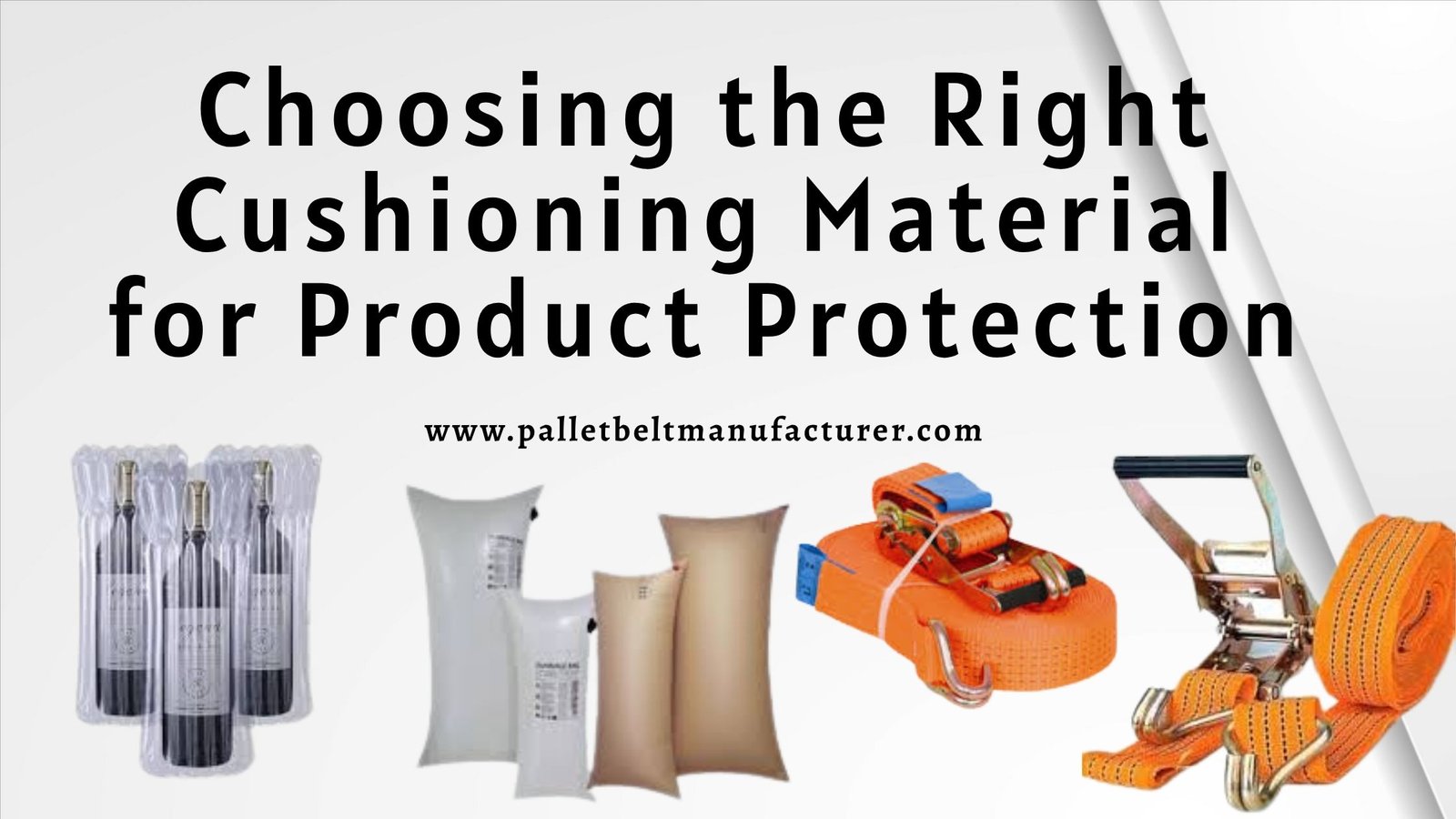
Products can experience significant handling and transportation risks before they reach their destination.
During loading, unloading, storage and transportation, packaged goods may be exposed to impact, vibration, compression and movement.
For fragile or sensitive products, appropriate cushioning material can help reduce the risk of damage.
However, there is no single cushioning material suitable for every product.
The right choice depends on the product’s weight, shape, fragility, transportation conditions, packaging configuration and expected handling environment.
Businesses working with an experienced Industrial Packaging Manufacturer can evaluate these factors before selecting a suitable protective packaging solution.
Dpack provides packaging solutions for commercial and industrial applications and can support businesses evaluating product protection and packaging requirements.
What Is Cushioning Material?
Cushioning material is used inside or around packaging to help protect products against physical forces during handling and transportation.
Its primary functions can include:
- Absorbing impact
- Reducing vibration
- Preventing product movement
- Separating components
- Protecting surfaces
- Supporting fragile products
- Reducing contact between products and packaging
The appropriate cushioning material depends on the type of product being protected.
1. Consider the Fragility of the Product
The first step in selecting cushioning is understanding how sensitive the product is.
Fragile products may include:
- Glass components
- Electronics
- Precision instruments
- Ceramic products
- Finished surfaces
- Sensitive machinery components
These products may require greater protection against impact and vibration.
Products with higher durability may require less cushioning.
2. Consider Product Weight
Weight is an important factor when selecting cushioning material.
A lightweight product and a heavy industrial component can place very different demands on protective packaging.
Heavy products can generate greater forces during movement or impact.
The cushioning material should therefore be capable of supporting the product without excessive compression or failure.
3. Consider Product Dimensions and Shape
The shape of the product can influence how cushioning should be designed.
Products may be:
- Flat
- Long
- Irregular
- Cylindrical
- Box-shaped
- Multi-component
Irregularly shaped products may require customized cushioning or additional support points.
The objective is to prevent unwanted movement while maintaining adequate protection around vulnerable areas.
4. Consider Transportation Conditions
Packaging requirements can change depending on how a product is transported.
Road transportation may involve vibration and repeated handling.
Sea transportation may involve longer transit times and environmental exposure.
Air transportation can involve multiple handling stages and strict weight considerations.
Businesses should therefore evaluate the complete transportation route when selecting cushioning material.
5. Impact Protection
One of the primary functions of cushioning is impact protection.
If a package experiences sudden impact, the cushioning material can help absorb or distribute some of the resulting force.
The effectiveness depends on factors such as:
- Material properties
- Cushion thickness
- Product weight
- Impact conditions
- Packaging design
Simply adding more cushioning does not necessarily guarantee better protection.
The material and configuration need to be appropriate for the product.
6. Vibration Protection
Some products can be damaged by continuous vibration rather than a single major impact.
Transportation vehicles can expose packaged products to vibration over extended periods.
Sensitive products may therefore require cushioning materials that help isolate them from these movements.
The packaging design should consider both the product and the expected transportation environment.
7. Preventing Product Movement
Cushioning can also help keep products in position.
If a product moves freely inside a package, it may repeatedly contact the packaging walls or other products.
This can increase the risk of:
- Scratches
- Dents
- Breakage
- Surface damage
- Component displacement
Appropriate cushioning can fill empty spaces and provide support around the product.
8. Compression Resistance
Stacked packages can experience considerable pressure.
Cushioning material may compress under load.
If the material compresses excessively, the product may lose the protection originally provided by the packaging.
Businesses should therefore consider the expected stacking conditions when selecting cushioning.
This is especially important for warehouse storage and palletized shipments.
9. Surface Protection
Some products may not be fragile but can still be easily scratched or damaged.
Examples include:
- Painted components
- Polished surfaces
- Finished metal parts
- Furniture components
- Electronic housings
For these applications, cushioning should prevent direct contact between the product and harder packaging surfaces.
Why Choose Dpack?
Dpack provides packaging solutions for businesses across industrial, commercial and logistics applications.
When selecting protective packaging, businesses can discuss their specific requirements, including:
- Product dimensions
- Product weight
- Product fragility
- Transportation method
- Packaging quantity
- Pallet configuration
- Reuse requirements
- Storage conditions
This information can help determine an appropriate packaging approach.
Businesses looking for an Industrial Packaging Manufacturer can approach Dpack to discuss product protection and packaging requirements.
For palletized shipments, businesses can also discuss pallet packaging and securing requirements when evaluating solutions such as pallet belts and related products.
Conclusion
Choosing the right cushioning material is an important part of protecting products during storage, handling and transportation.
The ideal material depends on several factors, including product weight, fragility, dimensions, shape, transportation conditions, stacking requirements and the type of protection required.
Foam, paper-based materials, corrugated components, air-based cushioning and molded protective solutions can each serve different applications.
Businesses should avoid selecting cushioning based only on price or material type. Product protection, durability, packaging efficiency, sustainability and total lifecycle cost should all be considered.
For palletized shipments, cushioning can also work alongside pallet packaging and load-securing solutions to protect individual products and stabilize the overall shipment.
Working with an experienced Industrial Packaging Manufacturer can help businesses assess their packaging requirements and identify suitable protective solutions.
Dpack can be approached for industrial packaging, pallet packaging, and product-protection requirements, including bulk and application-specific needs.
A well-designed cushioning system can help businesses reduce handling risks, protect valuable products and create a more reliable packaging process throughout the supply chain.
Frequently Asked Questions
1. What is cushioning material used for?
Cushioning material is used to help protect products from impact, vibration, movement, compression and surface damage during handling and transportation.
2. How do I choose the right cushioning material?
Consider product weight, fragility, dimensions, shape, transportation conditions, stacking requirements and the type of protection required.
3. Is foam suitable for industrial packaging?
Foam can be suitable for many applications, but the appropriate foam type, density and thickness depend on the product and required protection.
4. Is paper-based cushioning suitable for all products?
No. Paper-based cushioning can be useful for certain lightweight and surface-protection applications, but heavy or highly fragile products may require different solutions.
5. Can cushioning materials be reused?
Some cushioning products can be designed for repeated use. Businesses should evaluate durability, cleaning, storage and return logistics.
6. What is the difference between cushioning and lashing?
Cushioning primarily protects the individual product from physical damage, while lashing helps secure the overall load during transportation.